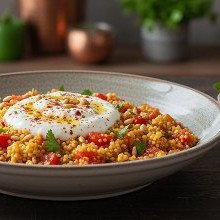
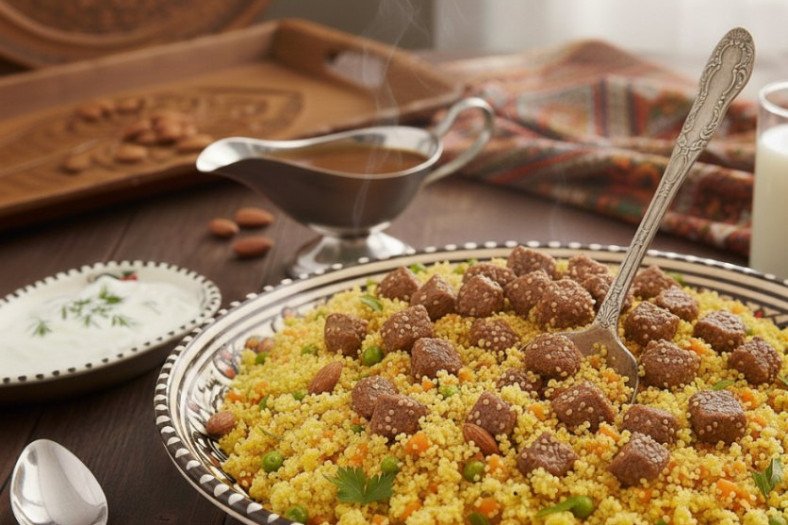
Couscous Pilaf With Lamb Meat (Moroccan Style) Recipe
Couscous; It is obtained by mixing semolina with flour, eggs and milk, turning it into dough, drying it and passing it through special sieves and sifting it into large particles. When cooked with meat, it creates a different alternative to offer protein and carbohydrates together. You can bring this very special and traditional taste of Moroccan culture to your home. Enjoy your meal!
Chop the veal into nut-sized chunks. Peel the onion and chop it into cubes.
Heat 2 tablespoons of oil in a pressure cooker and fry the meat in this oil until it turns brown. Add chopped onions, crushed 1 clove of garlic, salt and spices to the roasted meat.
Add 3-4 cups of hot water to the pot, close the lid and cook on medium setting for 15 minutes.
Melt two tablespoons of butter in another saucepan and fry the couscous in this oil for 1-2 minutes.
Take the cooked meat in a separate place from the pressure cooker with a colander and ladle. Strain the broth through a wire strainer. Add 3 glasses of hot broth to the couscous and cook it on low heat for about 10-15 minutes until the water is absorbed and let it brew.
Add the remaining butter to the brewed couscous rice, add half of the pieces of meat and mix them all.
Sprinkle the remaining pieces of meat on the couscous you have taken on a wide serving plate and serve hot. Bon Appetit!
Benefits of Ingredients in Couscous Pilaf With Lamb Meat
Keep in mind: You can click on each ingredient to find other recipes that use that ingredient.
Couscous Pasta:
Couscous is a traditional pasta of North African origin, made from semolina. Rich in fiber, protein, and selenium, it supports digestive and immune systems. Its iron and manganese content contributes to energy production. It pairs excellently with vegetables, meats (especially chicken and lamb), legumes like chickpeas, and fresh herbs. It's a quick-cooking, nutritious alternative.
Lamb Meat Cubes:
Diced lamb meat is a high-quality protein source, rich in iron, vitamin B12, and zinc. These essential minerals and vitamins are crucial for red blood cell formation, nervous system function, and a robust immune system. Commonly preferred in stews, sautés, and kebabs, lamb pairs exceptionally well with ingredients like potatoes, carrots, tomatoes, fresh thyme, and rosemary.
Dry Onion:
Dry onion is a kitchen staple and a powerful antioxidant source. Its quercetin content helps protect the body against free radicals, reduces inflammation, and may support heart health. Rich in Vitamins C and B6, and manganese, it strengthens the immune system. Its prebiotic fibers contribute to digestive health. It is widely used in dishes ranging from meat dishes to vegetable sautés, pilafs, and soups. It pairs perfectly with garlic, tomatoes, peppers, and red meat.
Turmeric:
Turmeric, thanks to its curcumin content, offers powerful antioxidant and anti-inflammatory effects. It supports joint health, improves digestion, and may contribute to cognitive functions. To enhance its bioavailability, it is recommended to use it with black pepper, and for a synergy of flavor and benefit, with ginger or coconut oil.
Butter:
Butter is a rich, flavorful fat derived from milk. It contains fat-soluble vitamins like A, D, E, and K2, along with healthy fatty acids, serving as an energy source. It's easily digestible. Butter enhances the taste of meals and rice dishes, is spread on bread, or used in sauces. It's indispensable for breakfast tables and various recipes.
Meat Broth:
Bone Broth is a nutritious liquid obtained by simmering bones and meat for a long time. Its rich collagen content supports joint health, improves skin elasticity, and helps strengthen the gut barrier. It is also rich in minerals like calcium and magnesium. It adds depth to soups and enhances flavor in rice dishes and sauces. Beneficial during recovery processes and for supporting the immune system.
Garlic:
Garlic, thanks to its allicin compound, offers strong antioxidant and anti-inflammatory properties. It can boost the immune system, increasing resistance against illnesses. Furthermore, it contributes to cardiovascular health by helping regulate blood pressure and balance cholesterol levels. Widely used in traditional medicine, garlic is also known for its digestive support effects. An indispensable ingredient in meat dishes, vegetable sautés, and Mediterranean cuisine, it pairs wonderfully with herbs like rosemary and thyme.
Black Pepper:
Black pepper, a kitchen staple, offers not just flavor but also significant health benefits. Thanks to piperine, its active compound, it boasts powerful antioxidant properties, helping to combat free radicals. It can stimulate the digestive system, enhancing nutrient absorption and notably increasing the bioavailability of curcumin found in turmeric. Additionally, it's effective in reducing gas and bloating. It also has a mild metabolism-boosting effect. With a wide range of uses from red meats to poultry, vegetable dishes to soups, it pairs excellently. It harmonizes perfectly with spices like cumin and coriander, as well as ingredients like lemon and garlic, adding depth to dishes.
Olive Oil:
Olive oil, especially in its extra virgin form, is a powerful source of health benefits due to its high content of polyphenol antioxidants and monounsaturated fatty acids (oleic acid). It supports heart health by helping to lower bad cholesterol (LDL) and raise good cholesterol (HDL). With its anti-inflammatory properties, it reduces inflammation in the body, prevents cell damage, and provides protection against chronic diseases. It supports the digestive system and contributes to skin health. An indispensable part of Mediterranean cuisine, it pairs wonderfully with salads, vegetable dishes, fish, legumes, and fresh bread.
Sac roasting is among the important flavors of Turkish cuisine. It is one of the dishes frequently made and consumed especially during Eid al-Adha. Sac roasting is traditionally cooked on a flat and wide metal plate…
Artichoke grows in abundance especially in the South Aegean regions of Turkey. Therefore, many varieties of cold dishes are made only with olive oil. With its filling and nutritious properties, it often finds its place…
The word "stew" is of Persian origin and means "meat dish, plain or with vegetables, cooked with roasted onions and tomato paste." Whichever material is used more is called by its name. Such as lamb stew, beef stew, etc.…
Couscous is not a type of pasta as it is thought. In our country, unlike Moroccan couscous, semolina, flour, egg and milk are mixed and turned into dough. It is dried and passed through special sieves and sieved into…
50 Min
Would you like to support us?
SmarDish provides the ability to save your fridge content. If you like TarifMotoru and want to support us, please consider subscribing to SmarDish Premium.
Ali Nazik kebab from the Antep region is one of the famous geographically registered kebab varieties with its crispy buttered pitas, roasted eggplant and minced meat made with a cleaver. There are many rumors about his…
Dried beans, the number one classic of Turkish cuisine, provide all the minerals, vitamins and resistance the body needs during the winter months. You can use your beans whenever you want by boiling them in advance and…
 For: 4 People
 Prep: 15 Min


 45 Min